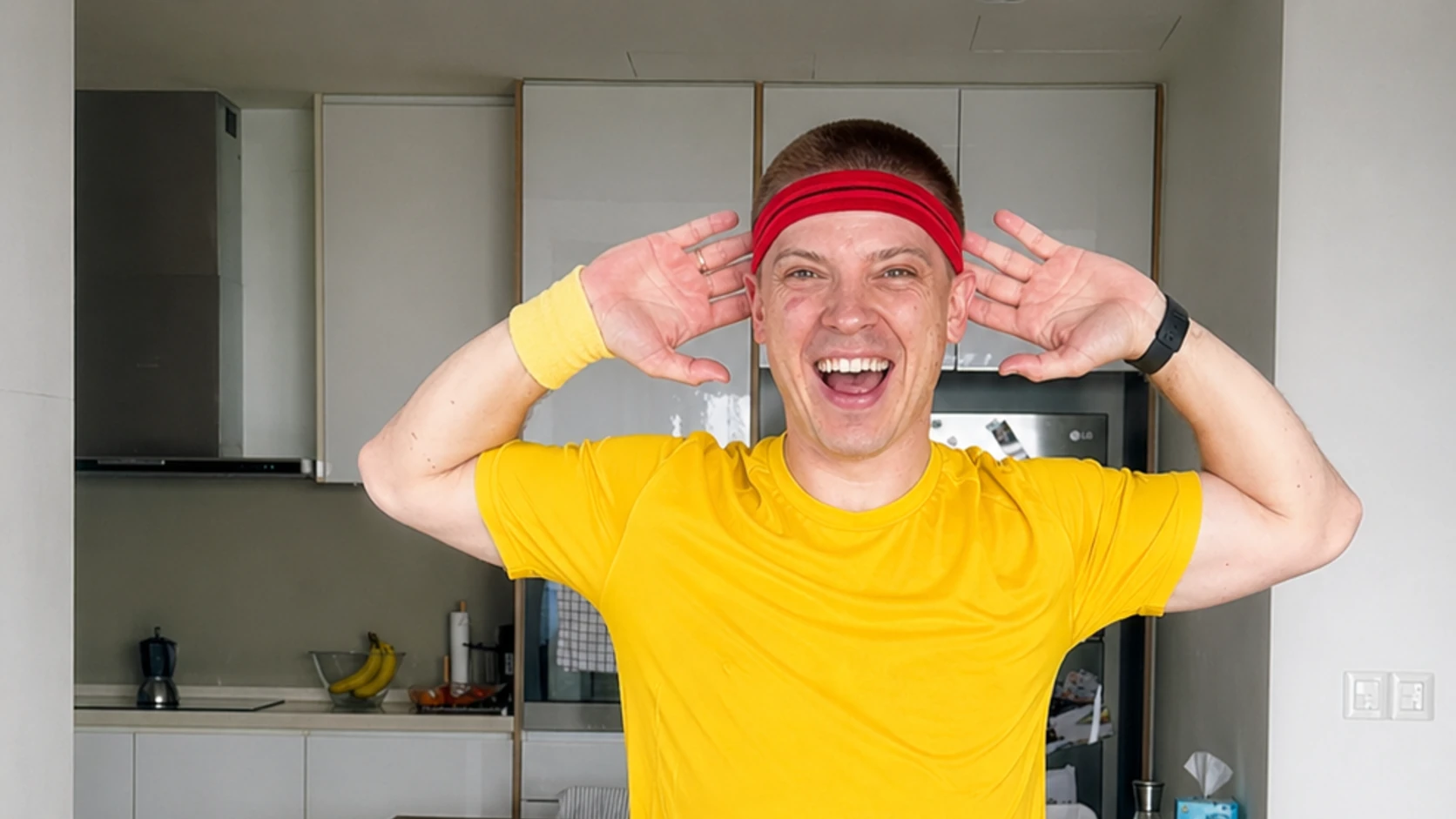
Measure the space by movement, not distance
You do not need to walk a mile across the room to benefit from an indoor workout. A compact routine can change direction in place and use the arms to add rhythm. Think of the room as a small stage: you have a base position, a right side, a left side and a comfortable range in front of you. That is enough for many useful patterns.
Clear anything you might catch with your feet and check that you can extend your arms without hitting furniture. If you share the room, choose a time when the floor is calm. Creating a predictable setup makes it easier to begin and reduces the temptation to wait for a larger or more perfect space.
The best small-room movement patterns
Marching in place is the foundation. Step touches add side-to-side movement without requiring travel. Heel digs give the feet a clear rhythm, while gentle knee lifts bring a little more range to the hips. You can also take two small steps forward and two steps back if the floor is clear. Keep the turns slow and stay aware of your balance.
Use the arms to make compact steps feel more active. Try relaxed swings, forward reaches, cross-body reaches or elbow pulls. Keep the shoulders down and choose a range that feels comfortable. The point is not to make the room look busy. It is to give your body enough purposeful movement to support your chosen pace.
A 12-minute small-room routine
Start with two minutes of easy marching. Spend two minutes on step touches, then two minutes alternating heel digs and a comfortable march. Use the next four minutes for thirty-second intervals: brisk march, easy march, brisk march, easy march. Finish with two minutes of slow walking and relaxed shoulder rolls.
This structure is short enough for a bedroom or office break and can be repeated if you have more time. If the pace feels too hard, keep the intervals at twenty seconds. If you want more challenge, add bigger arm movements or a slightly quicker cadence. Your small-room workout should feel adaptable rather than cramped.
Keep the workout interesting
Change the music, not necessarily the whole routine. A different beat can make familiar steps feel new. You can also use a simple theme: walk through the warm-up, brighten the pace for one song and finish with a calm track. Follow-along videos can help when you want someone else to provide the structure, while a personal playlist works when you prefer freedom.
Dopamine Steps is built around this kind of accessible movement. You can follow music-led indoor walking patterns without needing a gym or a large floor. A playful prompt or a clear timer can give the workout personality while the basic steps remain easy to modify.
Small space does not mean small progress
A workout in a small room can improve your confidence with starting, your ability to sustain a rhythm and your willingness to choose movement during busy days. You may notice that the same interval feels easier, that your arms stay active longer or that recovery becomes smoother. These changes are useful even when you are not traveling across the floor.
Use time, comfort and repeatability as your main measures. A 12-minute walk you complete several times a week may support your routine better than a large-space workout you rarely begin. Let the room be enough for today, then build from the habit you created there.
A practical weekly plan
Try the 12-minute routine on two weekdays and choose a longer indoor walking video on the weekend if you have more room or time. On another day, use a five-minute march as a break from sitting. Keep one easy day in the week and adjust the plan when your energy changes. The most effective small-room routine survives real life.
When you want a next step, add two minutes or one extra interval rather than redesigning the entire workout. Keep the movement grounded, the turns controlled and the atmosphere encouraging. A small room can hold a useful practice: press play, take the space you have and let the next step be enough.