Why five minutes can be useful
A short walk removes the biggest obstacle: the feeling that exercise needs a large block of time. Five minutes can fit between meetings, before a shower or while dinner is in the oven. It can also be a low-pressure way to learn how your body responds before you choose a longer session. The goal is not to squeeze dramatic results from a few minutes. It is to make movement available on a day when a longer plan might not happen.
Short movement blocks can also accumulate across the day. You might use one walk in the morning and another after a long period of sitting. Each block gives you a reason to stand, change position and pay attention to how you feel. If five minutes is all you have today, let it count as the plan rather than treating it as an incomplete version of a harder workout.
Your five-minute walking workout
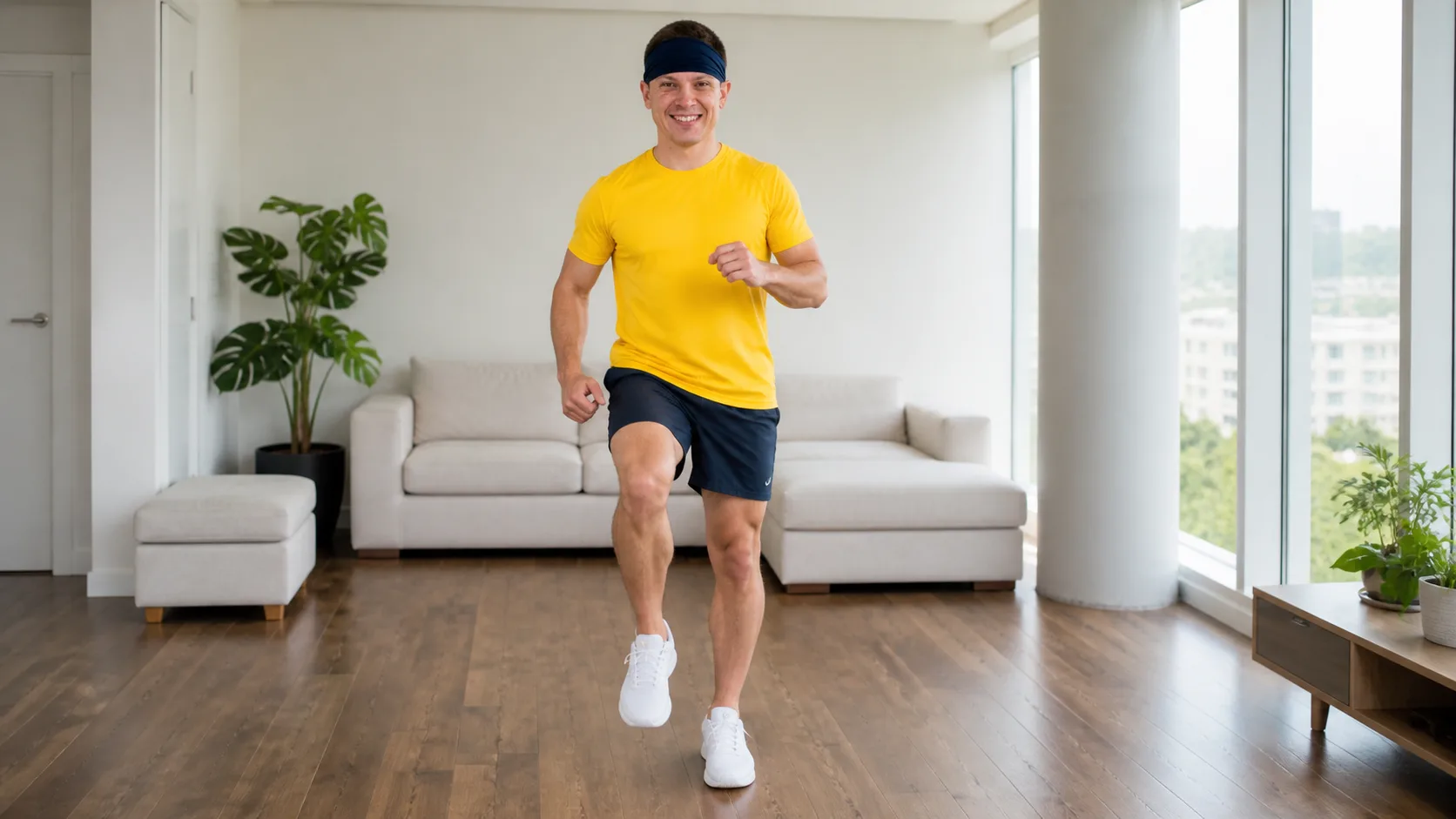
Minute one is an easy march. Keep the feet close to the floor, let the arms swing naturally and use a pace that feels almost too comfortable. In minute two, add side steps: step right, bring the feet together, then repeat to the left. Keep the range small enough that you never have to rush back to the center.
During minute three, alternate heel digs with relaxed marching. In minute four, walk a little more briskly for twenty seconds, then recover for twenty seconds, repeating the pattern three times. Use minute five to slow down. Take smaller steps, relax the shoulders and let your breathing settle. You have completed the workout even if you decide not to add another minute.
Make the movements beginner-friendly
Keep one basic move available throughout the workout: an easy march with small steps. If a side step or heel dig feels confusing, return to the march and rejoin when you are ready. Coordination improves through repetition, not through forcing yourself to keep up. A clear fallback makes the routine easier to trust and gives you control over the pace.
Use a wall or stable chair nearby if you want optional balance support, but do not pull on an unstable object. Wear shoes that feel secure on your floor, clear away cables and rugs, and keep turns slow. If any movement causes pain, dizziness or unusual shortness of breath, stop. A five-minute routine should feel accessible, not like a test of what you can tolerate.
Choose the right effort
You may feel warmer and notice slightly deeper breathing, but you should still be able to speak a short sentence. If the brisk intervals make you lose control of the movement, reduce the pace or keep the arms relaxed. If the full routine feels easy after several attempts, make the arm swing more purposeful or add thirty seconds rather than jumping immediately to a much harder workout.
Energy changes from day to day. On a tired morning, the easy march may be enough. On another day, five minutes may become a warm-up for a longer video. Both outcomes are useful. Let the routine match today's capacity, then notice whether you finish feeling steadier, warmer or more willing to move again later.
Turn five minutes into a repeatable cue
Attach the walk to something that already happens: closing your laptop, making coffee, returning home or starting a favorite song. Keep the first step obvious. Clear the space, press play and march until the first minute ends. A reliable cue reduces the number of decisions between thinking about movement and actually beginning.
Try the routine on three different days before changing it. Repetition lets you learn which pace feels natural and which time of day is easiest to protect. If you want to progress, add a second five-minute block later in the day or move to the ten-minute beginner routine. Small progression is easier to repeat than an ambitious plan that only works once.
Use a short workout without pressure
A brief walk does not need to earn food, compensate for sitting or prove that you were productive. Its value can be simpler: you changed position, practiced a movement habit and gave yourself a clear transition. Keep the language around the workout neutral and encouraging. That makes it easier to return without negotiating with guilt.
Dopamine Steps uses music and simple walking patterns to make the start feel lighter. Choose a short video, use the first five minutes as your plan and stop at a comfortable point. The best next step is not always a longer workout. Sometimes it is finishing five minutes with enough confidence to come back tomorrow.