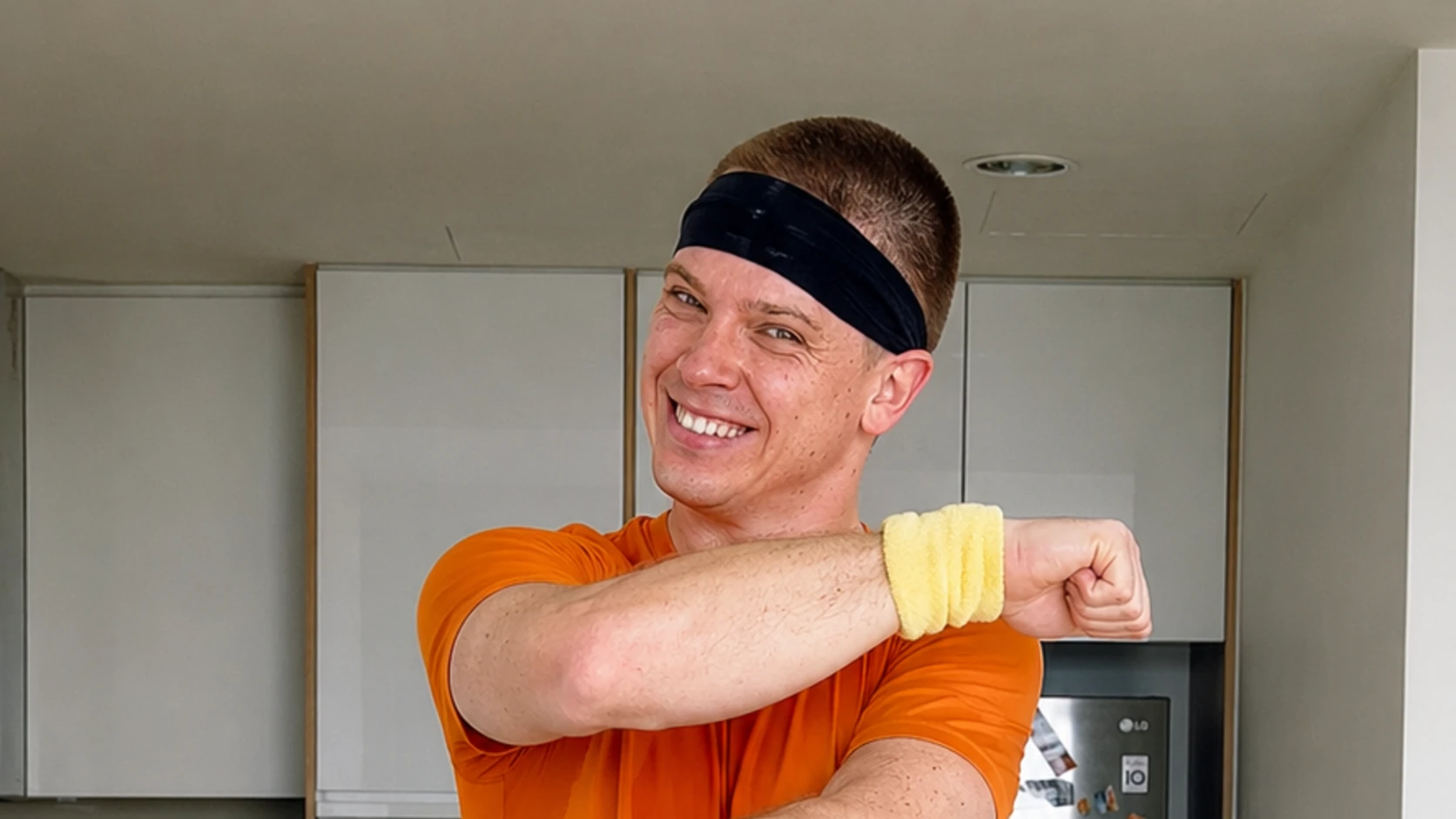
What a beginner workout should feel like
The first indoor walking workout should feel understandable rather than impressive. You should be able to recognize the base movement, adjust your pace and return to an easy march whenever a sequence feels confusing. This removes the pressure to learn choreography while your attention is already noticing breathing and balance.
A useful beginner pace makes you warmer and slightly more breathless, but you can still speak a short sentence. You are practicing control, not testing your limits. If the session feels too hard, make the steps smaller or slow down. If it feels easy after several sessions, add a short brisk interval.
Prepare without buying anything
Clear enough space to step side to side and reach your arms without touching a wall or table. Wear clothing that lets your hips and shoulders move freely. Supportive shoes are helpful on a hard surface, but you do not need weights, a mat or a machine. The absence of equipment is one reason walking at home is such a practical starting point.
Put water where you can reach it and decide whether you will follow a video or your own music. A repeatable setup reduces decisions. When the same corner, shoes or song becomes associated with movement, beginning can feel more automatic. Small environmental cues often matter more than a complicated plan.
A simple beginner sequence
Begin with three minutes of marching in place. Keep the feet low, relax the hands and let the arms swing naturally. Spend the next three minutes on step touches, moving right and left with a comfortable bend in the knees. If balance feels uncertain, keep the steps narrow and use a nearby wall or sturdy chair only for light support.
For the next four minutes, alternate one minute of comfortable marching with one minute of slightly quicker marching. Then use two minutes of heel digs and two minutes of gentle knee lifts. Finish with three minutes of slow walking and relaxed shoulder rolls. Shorten each block to create a 10- or 15-minute version.
How to progress without equipment
Progress can come from time, pace, range or coordination. Add two minutes to the session, extend a brisk interval by ten seconds or use a slightly larger side step. You can also make the arms more active by reaching, pulling the elbows back or pressing the hands forward. Change one element, then give your body several sessions to adjust.
Avoid the idea that more complexity is automatically better. Repeating a basic sequence helps you improve rhythm and confidence. A familiar routine also makes it easier to notice whether stamina is changing. The best progression is the one that leaves you able to move normally and willing to return.
When walking at home supports weight loss
Walking exercise can support a weight-loss goal as part of a wider pattern that includes nutrition, sleep, stress and daily activity. One workout cannot determine the result, and you do not need to punish yourself with exercise. A consistent beginner routine is useful because it gives you more opportunities to move and builds confidence in your ability to care for your body.
Track behaviors that you can repeat: sessions completed, duration and how you felt afterward. Energy, mood and stamina are meaningful feedback even when the scale does not change immediately. Let the workout be a supportive habit rather than a demand to compensate for a meal or a rest day.
A first-week plan
On the first day, try the shortest version and learn the movement patterns. On the third day, repeat it and add one brisk interval if the first session felt comfortable. On the fifth or sixth day, choose the version you enjoyed most. Gentle movement or rest can fill the days between. The purpose of the week is familiarity, not a dramatic transformation.
If you miss a planned session, restart with the smallest version instead of trying to make up the time. A routine that survives busy days is more valuable than one that only works when your schedule is perfect. Dopamine Steps workouts are designed for this approach: music-led, low-impact and clear enough to follow without equipment or a gym.