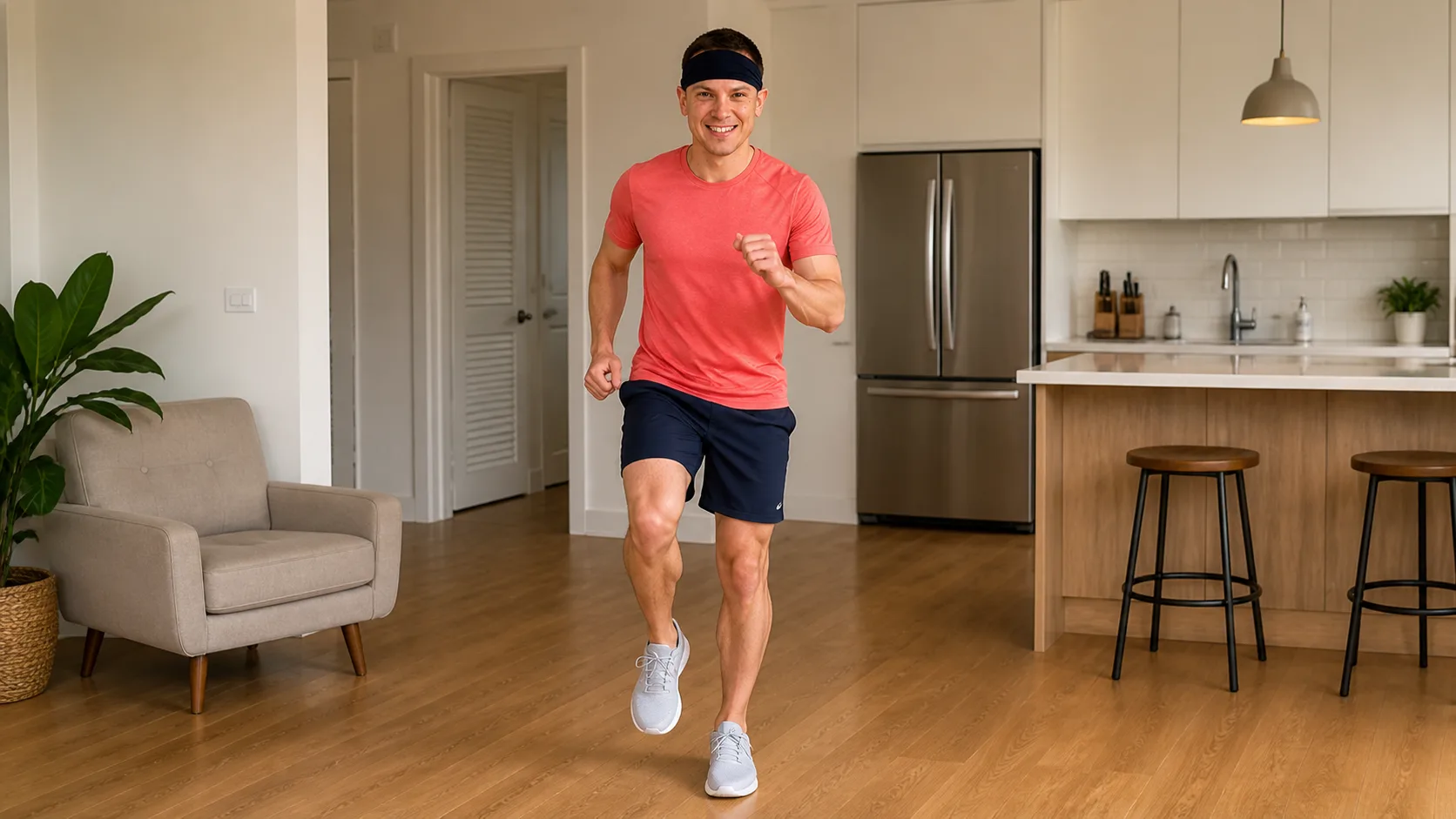
Does walking in place count as exercise?
Walking in place is a form of movement that can raise your breathing rate and involve more of your body when you add a natural arm swing. How demanding it feels depends on your pace, range of motion and the length of the session. You do not need to copy outdoor walking exactly for the movement to be useful. The practical goal is to create a controlled rhythm you can maintain indoors.
A walking-in-place workout is especially useful when weather, space or schedule makes an outdoor walk inconvenient. It can be a full short session, a warm-up or a movement break after sitting. It does not replace every other kind of activity, but it gives you a reliable option with very little setup. That reliability is valuable when you are building a beginner routine.
Set up your walking position
Stand with the feet about hip-width apart and keep the knees soft rather than locked. Let the shoulders rest away from the ears, look forward and imagine the top of your head lifting gently. Begin by transferring weight from one foot to the other. Then let each heel leave the floor without trying to lift the knee high.
Place the feet quietly and keep the movement under control. Your arms can swing beside the body or remain relaxed while you learn the rhythm. If balance feels uncertain, stand near a wall or stable chair. Clear enough space that your arms and feet cannot catch a cable, rug or furniture edge. Comfortable, repeatable movement matters more than a dramatic range.
A 12-minute beginner routine
Start with three minutes of easy walking in place. Use small steps and notice whether your breathing remains calm. For the next three minutes, alternate thirty seconds of walking with thirty seconds of side steps. Keep the side step narrow: step out, bring the feet together and change direction without crossing the legs.
Use minutes seven through nine for heel digs and gentle arm pulls, returning to walking in place whenever you need a simpler move. During minutes ten and eleven, alternate twenty seconds at a slightly quicker pace with forty seconds of recovery. Spend the final minute slowing down. Let the arms relax, make each step smaller and finish when your breathing feels settled.
Adjust the workout to your level
Make the workout easier by reducing the pace, keeping both feet close to the floor or shortening the session. You can also use a seated march if standing is not appropriate for you, although the movement and effort will feel different. Make the standing version more challenging only after it feels familiar: add a stronger arm swing, a slightly higher knee or a longer brisk interval.
Change one variable at a time so you know how your body responds. Faster is not automatically better if it makes your posture collapse or your feet land heavily. Use a pace that allows you to speak a short sentence. Stop for pain, dizziness, unusual shortness of breath or another concerning symptom, and seek appropriate professional guidance when needed.
What about step counters?
A watch or phone may not count every indoor step because devices use different movement signals and may respond to arm position. Treat the total as an estimate. Wear the device where it normally records walking best, but do not change safe form just to make the number rise. Time, breathing and consistency can be more useful measures for an indoor routine.
If you enjoy step goals, compare the device with itself rather than with someone else's total. Notice how many steps your usual twelve-minute session records, then use that as a personal reference. A lower count does not mean the workout failed. Stride, height, arm movement and device placement all change the number.
Build a simple weekly pattern
Try the walking-in-place routine two or three times during your first week, leaving easier days between sessions if you need them. Repeat the same structure before adding more time. Familiarity helps the movement feel smoother and lets you notice whether recovery is becoming easier. When twelve minutes feels comfortable, add one or two minutes or choose a longer beginner video.
Dopamine Steps combines walking in place with side steps, heel digs and music-led intervals so you always have a simple move to return to. Start with the smallest version that feels clear, keep the floor contact gentle and let repetition build confidence. You do not need a treadmill to begin. You need a safe space and one comfortable step after another.