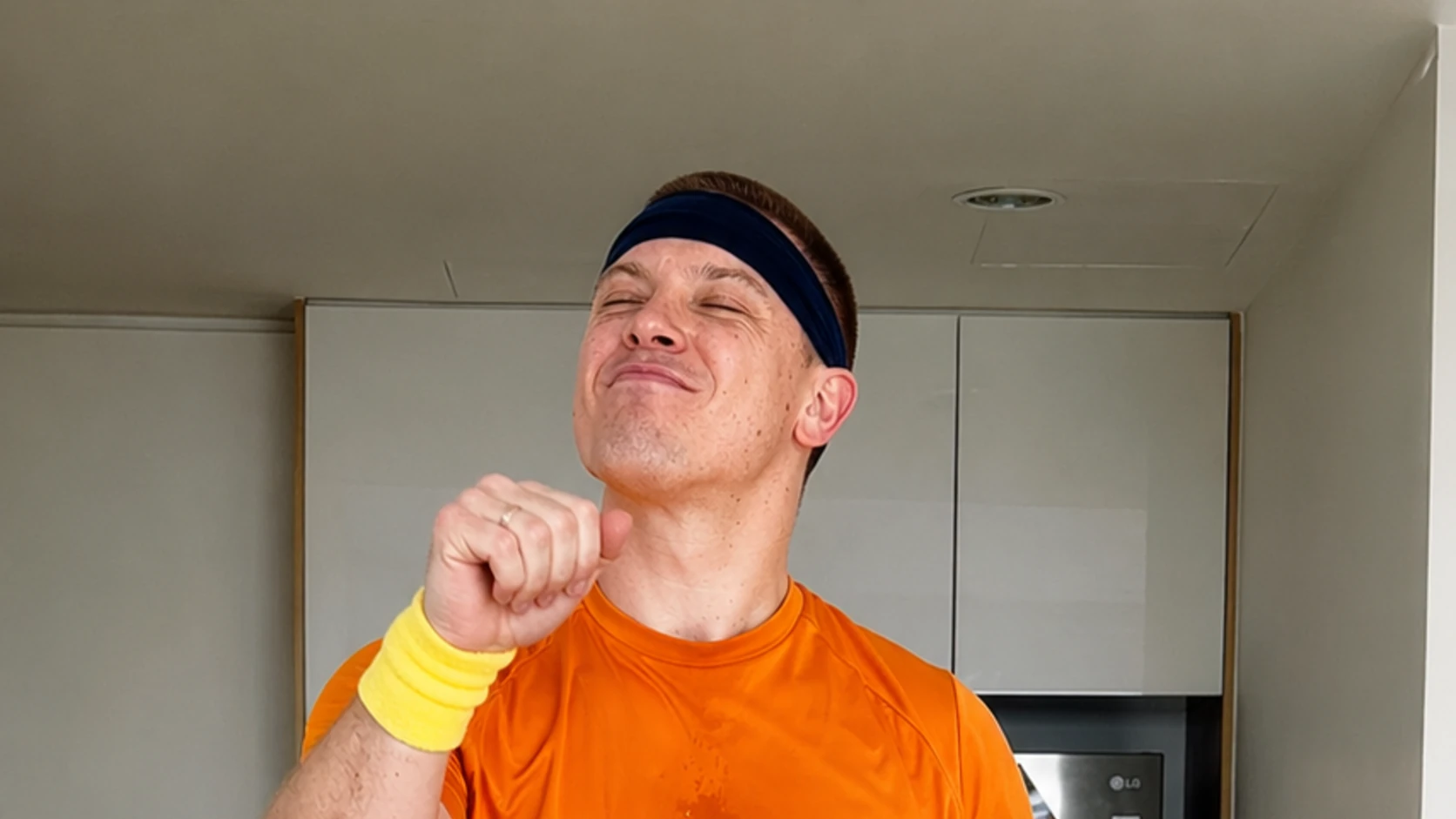
Why choose a standing workout
Some people simply prefer to stay upright. A standing routine is easy to see, easy to pause and easy to fit into a small room. It can also feel less intimidating if you are new to exercise or returning after time away. You can hold onto a nearby chair for balance, reduce the range of motion or take out any move that does not feel right.
The goal is not to isolate one perfect muscle. A full-body workout uses several areas together so the session feels coordinated and practical. Walking patterns train the lower body while arm movements add rhythm and effort. Your core works to help you stay upright and change direction. When the whole body participates, a short workout can feel satisfyingly complete.
The basic movement library
Build your routine from a few movements you can repeat confidently. Start with a march in place, keeping the steps light and the arms relaxed. Add step touches to the right and left. Try heel digs forward, then return to marching. For the upper body, use reaches overhead, gentle cross-body reaches and elbow pulls toward the ribs. These movements are simple enough to learn quickly and varied enough to keep the session interesting.
A standing workout becomes more challenging when you connect the movements without long pauses. For example, march for eight counts, step touch for eight, heel dig for eight and repeat. Later, you can change direction or add a controlled knee lift. Keep the transitions smooth and make the movement smaller whenever you lose balance or your breathing becomes too rushed.
A 20-minute full-body sequence
Use the first three minutes to warm up with an easy march and shoulder rolls. Spend four minutes on step touches, adding a reach across the body. For the next four minutes, alternate thirty seconds of knee lifts with thirty seconds of relaxed marching. Keep the knee height comfortable; the purpose is to involve the hips and trunk, not to force flexibility.
For the middle five minutes, combine a brisk march with upper-body patterns. Try four elbow pulls, four forward reaches and four easy punches, then return to the march. Finish with four minutes of side steps and heel digs at a gradually slower pace. The last minute can be quiet walking and breathing. You should finish feeling worked but still in control of your body.
Can standing exercise help with weight loss?
Standing exercise can contribute to weight loss by helping you increase daily movement and energy expenditure. The result depends on your whole routine, including nutrition, sleep and the amount of activity you do outside the workout. No single exercise can target fat from one area, and claims about losing belly fat in a specific number of days are not realistic for everyone.
A better goal is to make the workout repeatable. Choose a pace that lets you complete the session with good control, then return to it several times each week. Over time, you can add a few minutes, use more active arms or choose a longer video. Consistency creates more opportunity for progress than occasional all-out sessions.
Make it friendly for beginners
Beginners can remove pressure by using a low starting point. Try ten minutes, keep both feet close to the floor and allow yourself to observe the movement before adding intensity. If a step feels confusing, march in place until the next transition. If you need support, stand near a wall or stable chair. These are smart adjustments, not signs that you are doing the routine incorrectly.
Pay attention to your feet, knees and breathing. Your feet should feel stable, your knees should track comfortably and your shoulders should stay relaxed. Stop if you experience sharp pain, dizziness or unusual symptoms. If you have a medical condition or are unsure how to begin, ask a qualified professional for individualized guidance.
Make the workout feel like you
The most effective standing workout is one you can imagine doing again. Use music that gives the session a clear pulse. Add a playful theme, a small personal challenge or a phrase that reminds you why you are moving. On one day, your goal might be to complete twenty minutes. On another, it might be to show up for five. Both choices strengthen the habit.
Dopamine Steps uses standing cardio, walking patterns and playful prompts to make a full-body session feel accessible. Choose a workout, press play and let the routine carry some of the decision-making. You do not need to be an athlete, dance perfectly or move at the same speed as anyone else. Stay present, keep the steps comfortable and finish with a little more confidence than you started with.
Progress your standing cardio safely
Start by improving your familiarity with the movement library. Repeat a short sequence until you can perform it without looking down or thinking about every count. Then add one change: a slightly faster march, a more deliberate arm pull or an extra minute. This order keeps coordination ahead of intensity, which makes the workout feel smoother and more confident.
Balance deserves its own attention. Stand near a stable surface when you use knee lifts or directional changes, and keep the lifted foot low until the pattern feels secure. You can also widen your stance for stability. There is no need to copy the highest knee or biggest step in a video. Your version should feel controlled from the beginning to the end.
If you sit for long periods, a standing workout can be a useful movement break, but it should not be the only kind of activity you do. Add easy walks, mobility work or strength exercises when appropriate. A varied routine supports different qualities of movement while the standing session gives you a convenient way to raise your energy during the day.
You can make the session more engaging with a simple theme. Count steps, match the beat, alternate arm patterns or dedicate one song to each movement. These small games give your attention a task and can make time pass faster. The goal is not distraction from your body; it is a more positive relationship with the effort you are making.
A full-body workout can be short and still feel complete. Fifteen focused minutes may include a warm-up, a few intervals and a cool-down. If you have more time, add a second round or choose a longer video. If you have less time, keep the warm-up and choose two movements that feel good. A flexible menu is easier to use than a rigid rule.
Return to the question that matters most: would you willingly do this again? If the answer is no, reduce the intensity, change the music or choose a different format. A standing workout should be challenging enough to feel useful and welcoming enough to become part of your life.