Indoor movement is still movement
Walking outside has its own benefits, but the value of a routine should not disappear when the weather changes. Indoor walking lets you control the surface, temperature and duration. You can stop for water, lower the pace or finish after one song. That flexibility makes it easier to use movement as a realistic part of life instead of waiting for an ideal day.
You do not need to recreate an outdoor route exactly. The purpose is to keep your body changing position and your attention connected to a simple rhythm. Marching, step touches, heel digs and gentle knee lifts can create a useful low-impact session in a small area.
Choose the right indoor option
If you have a hallway, walk forward and back while keeping the turns slow and controlled. If you have only a small square of floor, march in place and use side steps. If your balance is uncertain, keep one hand near a stable surface and choose patterns that do not require fast direction changes. The workout should fit your space, not force your space to change.
Time is another variable you can adjust. A five-minute walk can interrupt a long period of sitting. Ten or fifteen minutes can create a complete reset. A 20- or 30-minute session can be useful when you want a longer workout. Choose the version that matches your day instead of treating the longest option as the only worthwhile one.
A 15-minute indoor walking plan
Begin with three minutes of relaxed marching. Use the next four minutes for step touches and heel digs, changing the pattern every minute. Then alternate thirty seconds of brisk marching with thirty seconds of comfortable marching for four minutes. Keep your feet close to the floor and use active arms only if your shoulders feel relaxed.
Finish with four minutes of slower walking and easy reaches. If you have more room, take a few small forward steps and return. If you do not, stay in place. The goal is to create a smooth transition from stillness to movement and then back to normal life. A small, complete routine is easier to repeat than a complicated plan.
Use music to create a boundary
Music can give indoor movement an obvious beginning and end. Choose a playlist or follow-along video before you start, then let the rhythm carry the next action. You do not need to count every step or invent a new move every thirty seconds. A steady beat can make marching and step touches feel more purposeful, especially when your mind is tired.
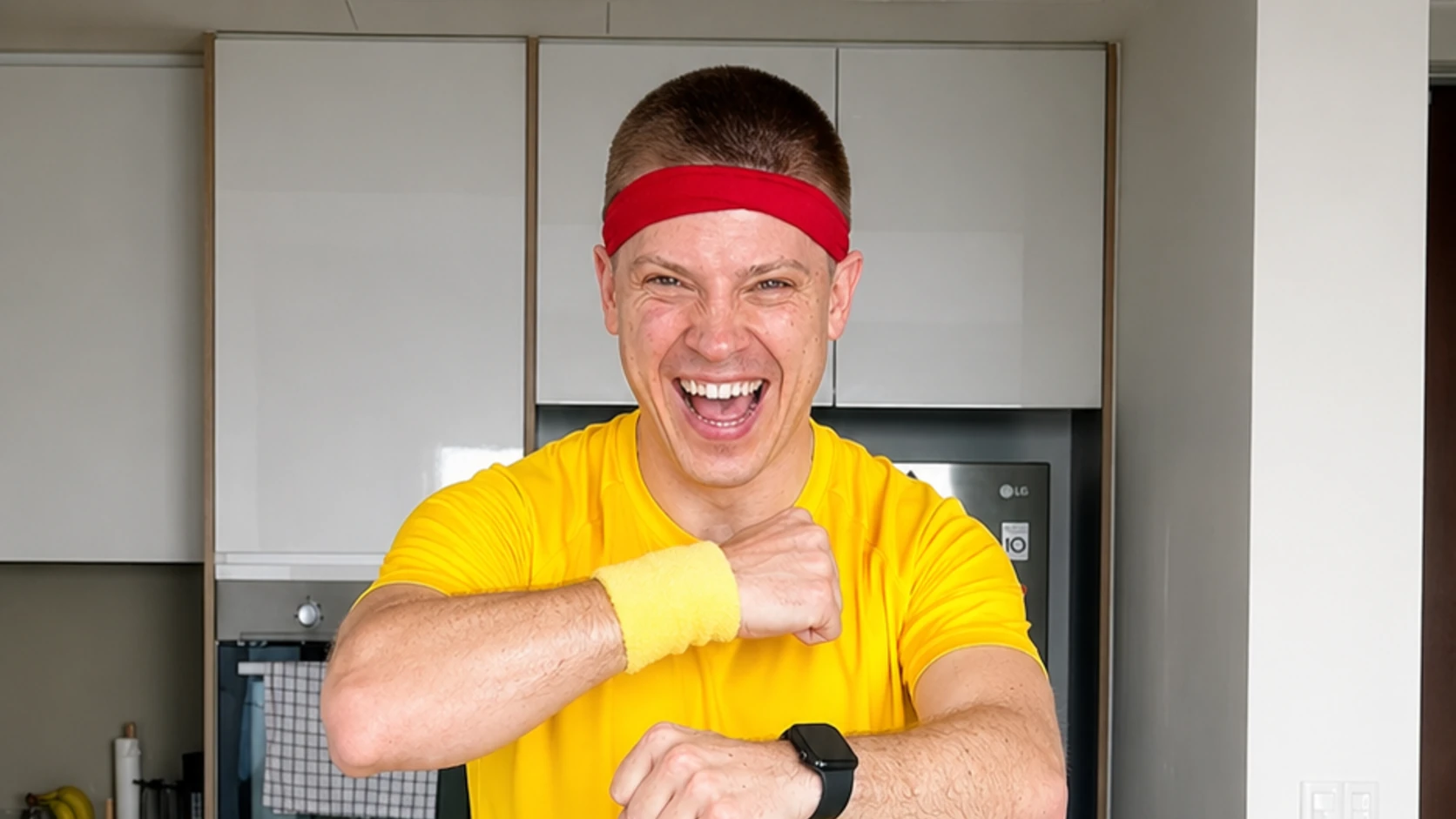
Dopamine Steps workouts are designed as music-led movement for real rooms and real schedules. A playful theme can help the session feel like a bright break rather than another task. Press play, begin with the easiest version and let the routine become a short change of state.
When outside walking is not available for a while
If you are indoors for several days, rotate the focus so the routine stays interesting. Use one day for a short walk, one day for a standing full-body session and one day for a longer low-impact workout. Add light mobility if it feels good. Variety can protect your attention while the basic walking pattern keeps the habit familiar.
Keep expectations realistic. A period of bad weather or a busy week may reduce your usual activity. The aim is not to imitate your best day; it is to keep a connection with movement until circumstances change. A flexible indoor plan gives you a bridge instead of an all-or-nothing pause.
Return outside when it feels right
When the weather or schedule improves, combine indoor and outdoor walking rather than abandoning one for the other. Indoor sessions are useful for convenience, quick breaks and music-led workouts. Outdoor walks can add fresh air and a change of scenery. Both can belong in the same weekly rhythm.
If you are dealing with persistent pain, dizziness, unusual shortness of breath or another health concern, stop and seek suitable professional advice. A walking workout should support your wellbeing. The best plan respects your body, fits your circumstances and helps you feel ready for the next comfortable step.