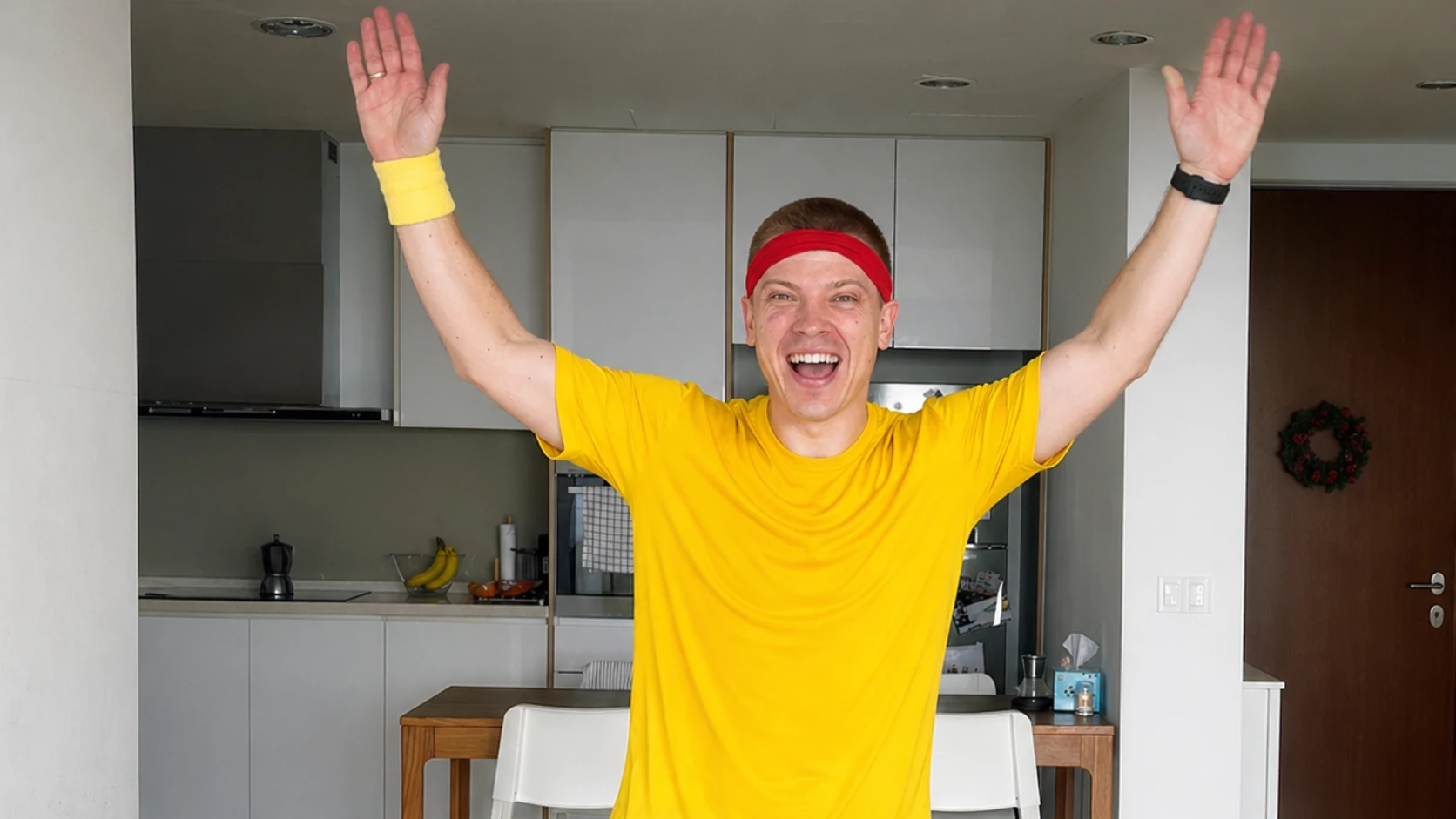
Why a 20-minute workout is enough to start
Twenty minutes is long enough to create a beginning, a middle and a finish, while still fitting into a busy day. You do not need to wait for a free hour. A focused indoor walk can help you break up sitting, raise your breathing rate and practice a movement habit that feels realistic to repeat.
The value comes from consistency, not from making every session maximal. Some days you will walk briskly; on other days you will keep the steps gentle. Both versions count when they help you stay connected to movement. Choose a pace that lets you feel in control and leave enough energy for the rest of your day.
Set up your space without equipment
Clear a route around furniture, check that the floor is not slippery and keep water nearby. You can walk forward and back if you have a hallway, or stay mostly in place if the room is small. A stable surface can be nearby for reassurance, but avoid leaning heavily on a rolling chair or anything that may move.
You do not need weights, bands or a step platform. Your pace, arm rhythm and range of motion provide enough ways to adjust the challenge. If you are following a video, place the screen where you can see it without looking down constantly. Good visibility helps you keep your posture comfortable.
The 20-minute indoor walking structure
Use the first three minutes for an easy march and relaxed arm swings. Spend the next four minutes on step touches, alternating sides every few beats. For four minutes, alternate thirty seconds of brisk marching with thirty seconds of comfortable marching. Keep the feet close to the floor and let the easier interval feel genuinely easier.
Use four minutes for heel digs, knee lifts and a return to marching whenever you need a reset. Then take three minutes of side steps with gentle reaches. Finish with two minutes of slower walking and calm breathing. If any pattern feels awkward, simplify it immediately; a steady march is always a useful base.
Make the session more full-body
Your arms can make a walking workout feel more active without adding equipment. Try reaching forward, pulling the elbows gently back or lifting the hands only as high as your shoulders feel comfortable. Match the arms to the legs rather than forcing a large movement. Smooth coordination matters more than dramatic shapes.
Keep the ribs relaxed and imagine that the top of your head is lifting. This helps you avoid collapsing forward when the pace increases. If your shoulders become tense, lower the arms and continue with the feet. The workout should respond to your body instead of asking you to ignore its feedback.
How to progress without pushing too hard
After several comfortable sessions, change one variable at a time. You might add one brisk interval, make the side steps slightly wider or extend the workout by two minutes. Avoid changing everything together. A small adjustment gives you a clear way to notice how your stamina and recovery respond.
Progress also includes feeling more confident with the routine. If you can begin more easily, stay in rhythm longer or finish without feeling depleted, those are meaningful signs. You do not need to chase sweat or soreness. The best no-equipment workout is one that leaves you willing to return.
A simple weekly rhythm
Try this 20-minute indoor walking workout two or three times during the week, with an easier day between sessions when needed. On busy days, use the warm-up and one interval block as a shorter version. On higher-energy days, repeat the interval section only if your recovery has been comfortable.
Keep a note of which music, time of day and movement patterns make the workout easier to start. That information is more useful than a generic promise to be more disciplined. Dopamine Steps is designed around real rooms and real schedules: press play, take the next comfortable step and let the routine grow from there.